Three Sundays, Three Finish Lines
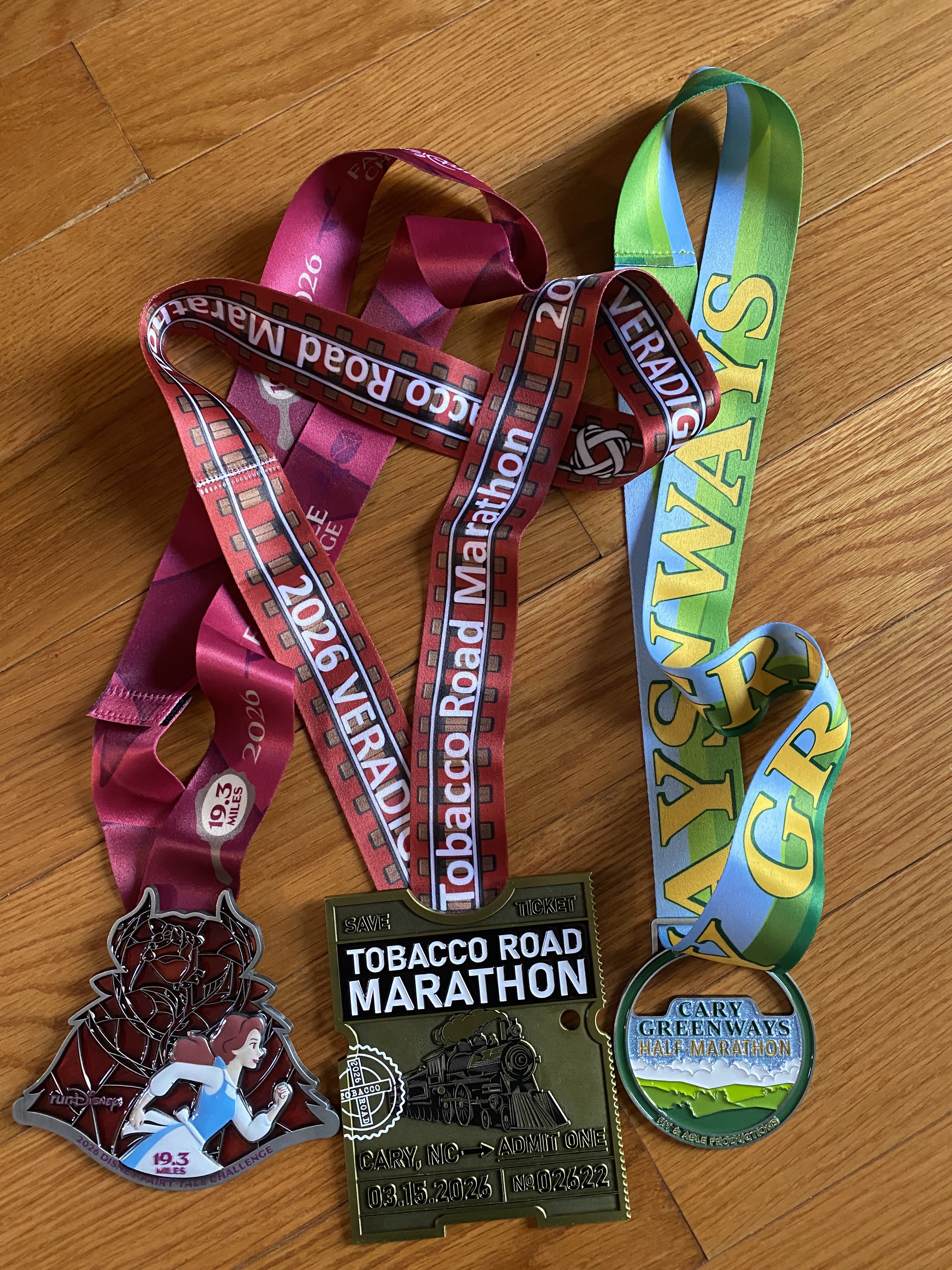
Nineteen miles. Then 26.2. Then 13.1. Three consecutive Sundays.
Somewhere around the second week, the ice packs became part of the evening routine and the soreness never fully left before the next Sunday arrived. The body remembers what you put it through, and mine was keeping a very detailed ledger. But I wanted to see what would happen if I stacked three races back to back. Not because it was wise. Because something in me needed to test a suspicion I have carried for years, that the conversation you have with yourself under sustained pressure is the most honest conversation you will ever have.
The 19-mile challenge came first. It sits in an awkward no-man’s-land, that distance. Not a half, not a full, just long enough to humble you without the gravity of a marathon. I treated it as a rehearsal, a chance to shake loose the nerves and remind my legs what race-day concrete feels like. The body cooperated. The mind stayed quiet. I filed it away as a prologue.
The marathon the following Sunday was a different animal entirely.
I have written before about the peculiar silence that descends when the course splits and the marathoners separate from the shorter distances. It never gets less striking. For the first several miles, you run inside a carnival. Spectators line the sidewalks with cowbells and hand-painted signs. Music thumps from portable speakers. Children shout encouragement they half-understand, and you feed on all of it, the noise, the color, the collective momentum of thousands of bodies pulling in the same direction. Your pace feels effortless. Your breathing settles into something you barely notice. You start to believe the hard part might not come.
Then the split happens. The half-marathon runners peel off toward their finish, and the crowd thins with them because the cheering infrastructure follows the larger group. What remains is a long, quiet road and a much smaller pack of people who chose the full distance. One moment you are inside a wave of sound and energy, and the next, a sudden quiet settles over everything, and the only rhythm left is your own shoes bouncing off the concrete.
That silence has weight to it.
I think about it often. The early miles of any serious undertaking come with their own kind of cheering, the excitement of a new beginning, the encouragement of people around you who believe in what you are doing. That energy is real, and it feels sustaining. But it is borrowed. It belongs to the moment, not to you. If you calibrate your pace to the noise of the crowd, you will start too fast and pay for it later. The people I admire most all learned this early. They appreciated the cheering. They never depended on it. They knew that the real work begins when the noise recedes and you are left with nothing but your own footsteps and whatever you have built inside yourself to keep going.
In those quiet miles, a conversation begins. Not with a training partner, not with a coach, not with the crowd. With yourself. And it is not a gentle conversation. It starts as a whisper, a mild observation that the legs feel heavier than they should, that the next mile marker seems unreasonably far. Then the whisper sharpens. “Why are you doing this? You did not sign up for this kind of suffering. You could walk. Nobody would know the difference.”
The voice is persuasive because it speaks in your own cadence, uses your own logic, knows exactly which buttons to press.
Over several races now, I have come to understand that this voice is not the enemy. It reflects back whatever you have been avoiding: the doubt you buried under a training plan, the fatigue you refused to acknowledge, the quiet fear that you might not be enough. The people who survive the late miles, on any course, are not the ones who silence that voice. They are the ones who let it speak and choose to keep moving anyway.
By mile 23, my legs were screaming. The voice was loud and specific. “You ran 19 miles last Sunday. A full marathon today is reckless. Your body is telling you to stop and you are ignoring it. This is not courage, this is stubbornness dressed up as discipline.” Every sentence landed with the weight of plausibility. I will not pretend I had some triumphant answer. I simply kept putting one foot in front of the other, not because the voice was wrong, but because I had decided before the race started that finishing was non-negotiable. I was not going to renegotiate that contract with myself in the middle of suffering.
Then I crossed the finish line.
The suffering that felt pointless ten minutes earlier suddenly meant something. Not evidence of toughness or grit, words that get thrown around too loosely, but evidence of something quieter: proof that I can do what I was not sure I could do. That feeling does not fade quickly. It settles into your bones and changes the way you walk into a room, the way you hold your ground when things get uncomfortable, the way you respond when the safe choice and the right choice pull in opposite directions.
The half marathon on the third Sunday was, in some ways, the most revealing of the three. My body was tired in a way that no amount of foam rolling could reach. The miles felt long from the very first one. And yet the internal conversation was calmer, almost familiar. The voice was still there, cataloging complaints and suggesting alternatives, but it had lost its authority. I had just run a full marathon on fatigued legs. Thirteen miles was not going to break me. I knew this not as an idea but as a lived fact, written into my muscles and my nervous system.
I finished first in my age group that day. I did not expect it. I was not chasing a placement, just running the way the previous two Sundays had taught me to run: at my own pace, listening to my own conversation, trusting what my body already knew. Sometimes the best results come not from trying harder but from finally getting out of your own way. There is a kind of freedom in that, in having already survived the thing you were afraid of, and discovering that the survival itself made you faster.
Three Sundays. Three distances. Three versions of the same conversation.
I keep running these races because they compress something into a few hours that otherwise takes years to learn. You will start with support. The support will thin. You will be left alone with your own doubts. The doubts will make excellent arguments. And you will have to decide, in real time, whether to listen or to keep moving. The answer is not always the same. Sometimes the voice is right and you genuinely need to pull back. But you cannot make that judgment if you have never practiced hearing it, if you have never sat in the quiet stretch long enough to know the difference between wisdom and fear.
Have the conversation with yourself more often. Not just on race day. Not just when things are falling apart. In the ordinary, unremarkable miles, when nothing is broken and nobody is watching. That is where the real training happens. The race just reveals what you have already built.
And life goes on …